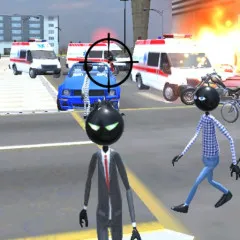
A physics-based 2D sandbox game, Ragdoll Playground lets users construct stuff, operate ragdolls, and experiment in large, empty regions.
Ragdoll Playground is a sandbox physics game where players place ragdolls, tools, and environmental objects on large landscapes. Win-lose conditions are absent. The basic gameplay is spawning, activating, combining, and observing item interactions.
A realistic physics engine, ragdoll characters, moving objects, and environmental props are key to the game. Physical forces cause objects to fall, collide, rotate, stack, and break, resulting in unanticipated results. Ragdoll Playground emphasizes experimentation, discovery, and player innovation over development.

Realistic gravity, impacts, pressure, and explosions cause natural, unpredictable effects in the advanced physics engine.
Huge sandbox worlds - Over 13 maps, including Abyss, Blocks, Snow, and Tower, each having its own rules and design.
A free object spawning system allows you move, rotate, resize, activate, and delete canvas objects.
Ragdoll interaction: All forces and collisions have a dynamic effect on Ragdoll figures.
There are no missions, time limits, or set goals, so there are no goals or limits. This means that you can try anything you want.
Because goods and surroundings can be combined infinitely, each experience is unique.
The game begins with selecting a map. You can try new things in each map because it takes you to a fresh area. You can use the object menu to bring any item into the world once you're inside. Once you have chosen an item, you will place it on the canvas and make it come to life.
Gameplay revolves around interaction. You can grab, move, rotate, resize, toggle, or delete things at any time. Tools and ragdolls can be meticulously assembled into constructions, traps, machinery, and insane physics tests.
With these controls, players can construct and rebuild indefinitely, tweaking their settings until they get the desired reaction - or until anarchy takes over.
The Ragdoll Playground game's continuing appeal stems from its unpredictable nature and independence. Even repeating the same setting rarely yields equal results. Small adjustments in angle, position, or time can completely alter what happens next.
The game rewards inquiry whether players are building complicated constructions, testing physics, or researching object behavior. Casual and dedicated players can enjoy stress-free sandbox fun and experiment with mechanics and systems.